
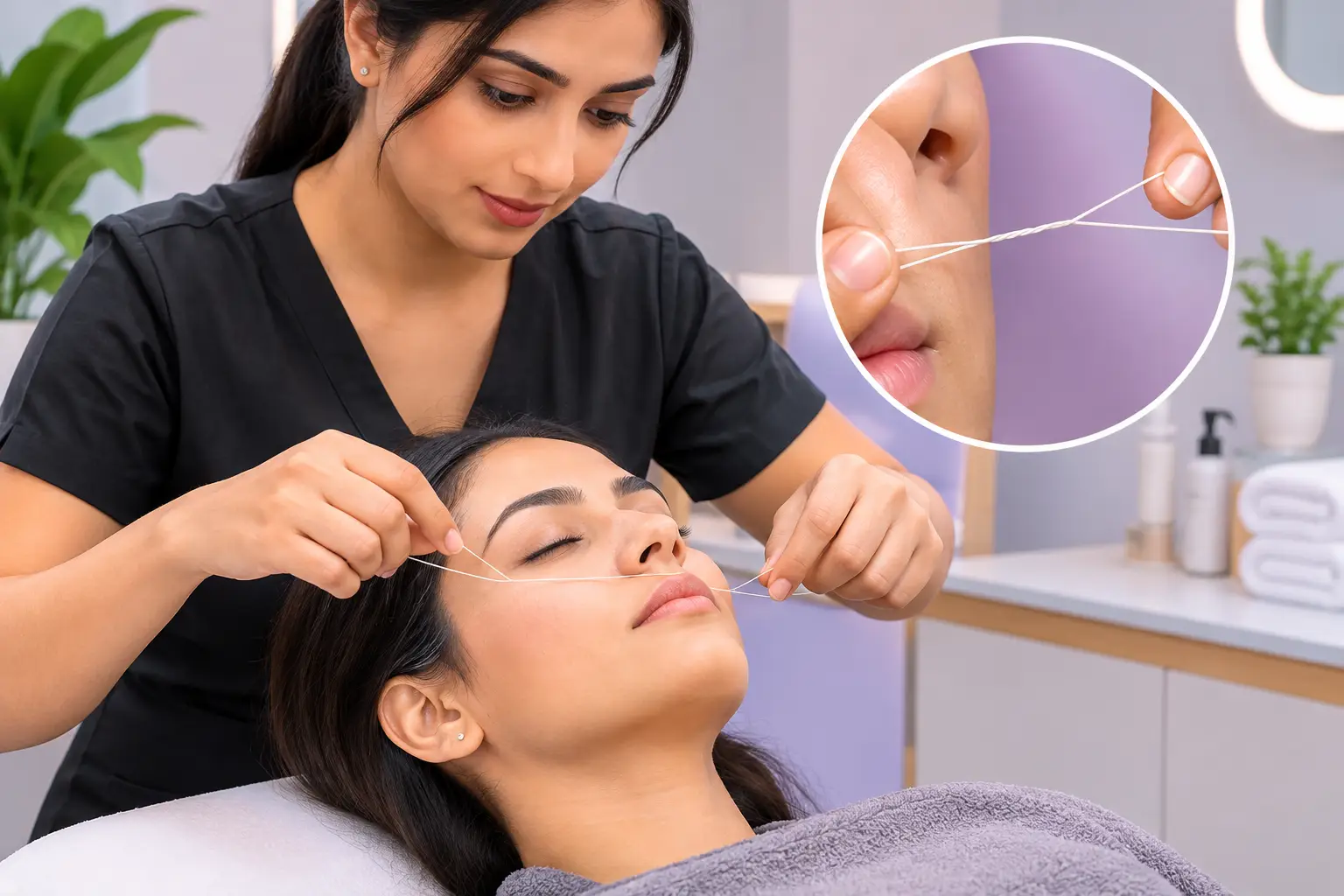
A clean cotton thread can create remarkably precise facial hair removal. If you have ever wondered, “how does threading work?” the answer is simpler than it looks: a trained esthetician twists the thread into a small loop, then glides it across the skin to catch and lift individual hairs directly from the follicle.
For brows, upper lip hair, chin hair, and other detailed facial areas, that control makes a real difference. Threading is quick, product-free, and highly targeted. It can be an especially appealing option when you want definition without applying wax, sugar paste, or depilatory products to your face.
How Does Threading Work, Exactly?
Threading begins with a clean, high-quality cotton thread. Your esthetician creates a twisted section in the center of the thread and controls it with their fingers. As that twist moves over the skin, it catches hairs in its path and removes them at the root.
Think of the twist as a tiny moving trap for hair. The esthetician opens and closes the thread with precise hand movements, guiding it along the desired shape. On an eyebrow, for example, this makes it possible to remove a very narrow line of hairs without disturbing the surrounding area.
Unlike methods that spread product over the skin first, threading relies on the thread itself. That means the service can be especially precise around curves, arches, and small areas where every hair affects the finished shape.
Why technique matters
Threading looks simple when it is done well, but it requires trained hands. The esthetician needs to keep the skin taut, work with a controlled rhythm, and choose a direction that removes hair efficiently while minimizing unnecessary tugging.
A rushed technique can cause more pinching, missed hairs, or breakage. A thoughtful technique focuses on clean removal and checks the shape as the service progresses. You should never feel like your concerns about sensitivity, brow shape, or how much hair to remove are being brushed aside.
What Does Threading Feel Like?
Most clients describe threading as a quick series of small pinches. The sensation is noticeable because the hair is being removed from the root, but each pass is brief. Many people find the upper lip more sensitive than the brows, while the exact experience depends on your skin, hair texture, hormone changes, and personal pain tolerance.
The good news is that threading is fast. A focused brow cleanup may take only a few minutes, so the intense part does not linger. Your esthetician can also work in short sections, give you a moment between passes, and adjust the pace if you are new to facial hair removal.
If you are nervous, say so before the appointment starts. There is no prize for pretending you are comfortable when you are not. Clear communication helps your esthetician make the service feel more manageable.
Why Clients Choose Threading for Facial Hair
Threading removes hair from the root, so the skin usually stays smooth longer than it would after shaving. Regrowth timing varies, but many clients return every two to four weeks for facial threading, depending on the area and how quickly their hair grows.
Its biggest advantage is precision. A thread can target a fine row of hairs and create a defined brow line without applying product to a wider section of skin. It is also a useful choice for clients who prefer to avoid wax on the face or who have found certain hair-removal products irritating in the past.
That does not mean threading is automatically the best method for everyone. If you have very reactive skin, active breakouts, broken skin, sunburn, or a recent skin treatment, your esthetician may recommend waiting. The right choice should be based on what your skin needs that day, not pressure to choose one method every time.
Threading vs. Waxing and Sugaring
All three methods remove hair from the root, but they work differently. Threading uses twisted cotton thread and is usually chosen for small, detailed facial areas. Waxing uses a product that adheres to the hair before it is removed. Sugaring uses a pliable paste and can be a great option for many clients, particularly in larger areas.
For brow shaping, threading often gives the most granular control because the esthetician can remove just a few hairs at a time. Waxing can be efficient when removing a broader strip of hair, while sugaring may be preferred by clients who enjoy its application and removal technique.
The best option depends on the area being treated, your skin sensitivity, your hair growth, and your past experiences. At Create Confidence, clients are guided toward the removal method that makes sense for their skin and comfort level, without being pushed into a one-size-fits-all routine.
How to Prepare for a Threading Appointment
Arrive with clean skin whenever possible. Heavy makeup, oils, and thick creams can make it harder for the thread to move cleanly across the area. If you are coming straight from work or wearing makeup, let your esthetician know so the area can be properly cleansed.
It also helps to let the hair grow in enough to be caught by the thread. You do not need a long period of growth, but very short stubble can be more difficult to remove completely. Avoid aggressively exfoliating the area right before your appointment, especially if your skin already feels tender.
Tell your esthetician about recent facial treatments and any skin products that make you sensitive. Retinoids, exfoliating acids, and some prescription products can affect how reactive your skin feels. Honest details are not awkward – they help protect your skin.
Aftercare That Keeps Skin Calm
It is normal to see temporary redness or small raised bumps immediately after threading. Hair follicles have just been cleared, and facial skin can respond with a little warmth or sensitivity. This usually settles fairly quickly, especially when the area is kept clean and left alone.
For the rest of the day, skip heavy makeup on the treated area if you can. Avoid touching, rubbing, or picking at the skin, and hold off on intense exfoliants, fragranced products, steam rooms, and high-heat workouts for about 24 hours if your skin is prone to irritation.
A gentle, fragrance-free moisturizer can help support the skin barrier once any immediate sensitivity has settled. If you are headed outside, use sunscreen. Freshly threaded skin deserves a little extra care, not a stack of strong products.
Can threading cause ingrown hairs?
Ingrown hairs are less common on the face for some people than in areas with coarser, curlier hair, but they can still happen. Hair type, skin buildup, friction, and post-appointment care all play a part. Clean technique, avoiding unnecessary touching, and using gentle exfoliation only when your skin is ready can help reduce the risk.
If you regularly get bumps after facial hair removal, do not keep guessing alone. Let your esthetician know what you are seeing, when it appears, and what products you use. A few personalized adjustments can make a meaningful difference.
Is Threading Right for You?
Threading is a strong option if you want crisp brow shaping, targeted facial hair removal, and a method that does not require wax or paste on the skin. It may be less ideal if your skin is currently irritated or if you would rather remove a larger area in one appointment using a different technique.
Your first threading appointment does not have to be a test of bravery. Ask questions, share your skin concerns, and start conservatively if you are unsure about your preferred brow shape. The right esthetician will make space for that conversation.
A little precision can change how you feel when you look in the mirror. Choose a service that respects your skin, your comfort, and the version of your confidence that feels most like you.