
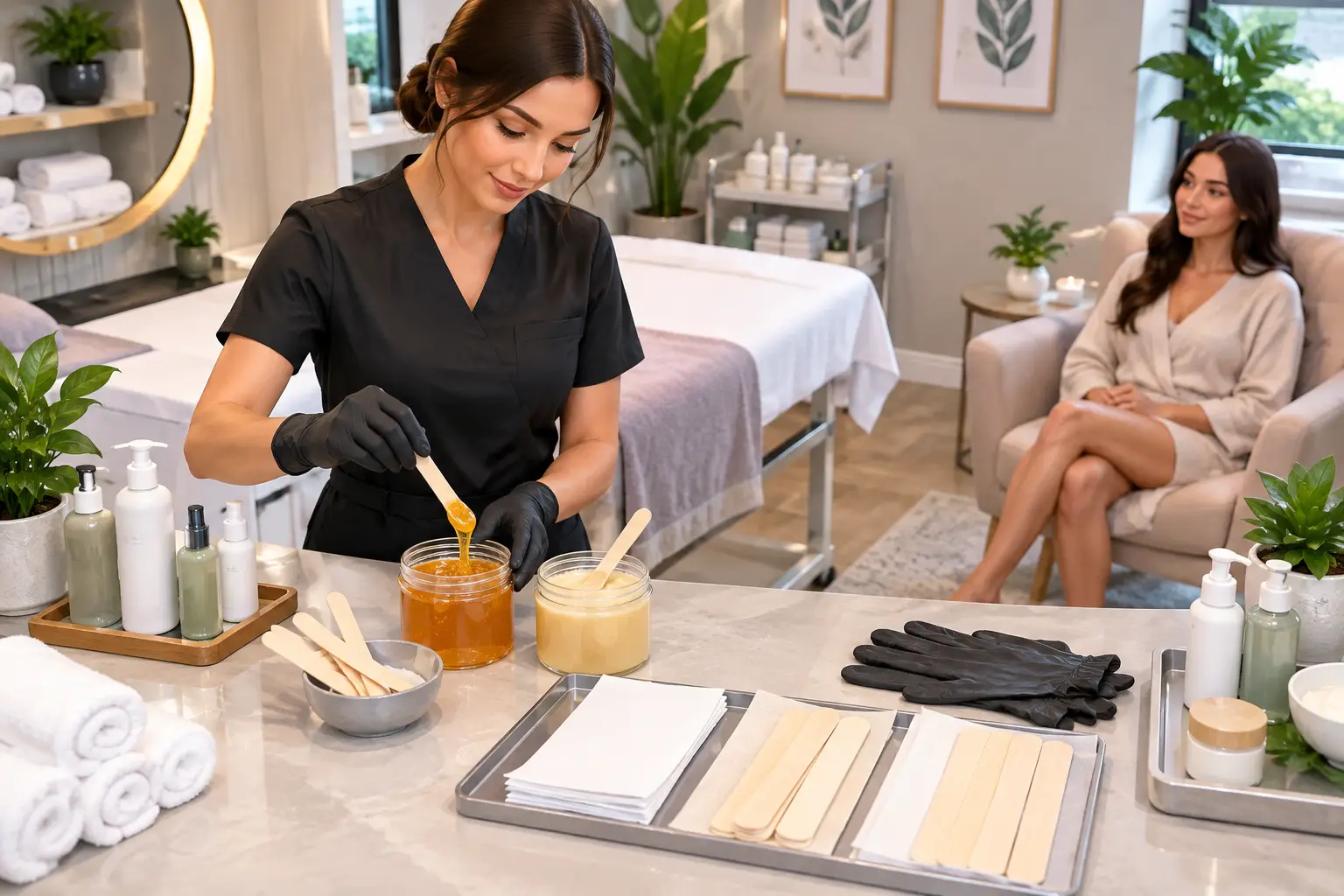
A Brazilian appointment should not feel like a test of your pain tolerance. If you are comparing sugaring versus waxing differences, you are probably looking for more than a quick answer about which one hurts less. You want to know what happens to your skin, whether one method can help with ingrown hairs, and which choice makes sense for your comfort level, hair type, and routine.
The honest answer is that both methods can leave you smooth for weeks. The better choice depends on your skin, your hair growth, the area being treated, and how the service is performed. A skilled professional should never pressure you into one method. They should explain the options, prepare your skin carefully, and help you choose what feels right for you.
Sugaring versus waxing differences: the basics
Waxing uses a warm resin-based wax that grips the hair. Depending on the wax and body area, a strip may be applied over the wax and removed quickly, or a hard wax may be applied and lifted once it has set. The goal is the same: remove hair from the root for longer-lasting smoothness than shaving.
Sugaring uses a pliable paste made from simple ingredients, commonly sugar, water, and lemon. The paste is worked into the skin and hair, then removed using a hand technique. Unlike traditional waxing, sugaring paste is generally applied against hair growth and removed in the natural direction of hair growth.
That difference in removal direction matters, especially for clients who regularly deal with irritation or ingrown hairs. Removing hair with its growth pattern can reduce pulling on the follicle for some people. It is not a guarantee that you will never get an ingrown hair again, but it can be a helpful part of a skin-focused routine.
How the techniques feel during an appointment
Pain is personal. A first-time Brazilian can feel intimidating whether you choose wax or sugar, particularly if you have been shaving, have coarse hair, or arrive feeling tense. Neither method is completely sensation-free because both remove hair at the root.
Many clients describe sugaring as more tolerable because it is removed in the direction the hair grows and because the paste tends to cling more to hair than live skin. Others prefer waxing because the application can feel familiar, efficient, and especially effective on certain hair textures or larger areas.
The provider’s technique often makes a bigger difference than the label on the service. Clean sectioning, proper tension on the skin, appropriate product temperature, and a confident removal technique all help make the appointment more comfortable. So does communication. You should be able to ask for a pause, take a breath, or let your esthetician know when an area feels especially sensitive. You are never expected to simply push through discomfort in silence.
What affects pain more than the method
Your hair length and appointment timing can change the experience. Hair that is too short may not remove cleanly, while very long hair can create extra tugging. For most body hair removal services, about one-quarter inch of growth is a useful starting point.
Sensitivity also tends to be higher around your menstrual cycle, after too much sun exposure, or when skin is dry and irritated. If you use strong exfoliants, retinoids, or certain acne treatments, tell your provider before your appointment. This is not awkward information. It helps protect your skin.
Which is better for sensitive skin?
Sugaring is often a strong option for sensitive skin because the paste is water-soluble and can be removed with water rather than oil-based residue removers. It is also applied at a lower temperature than many waxes, which may be reassuring if you are concerned about heat.
Still, “natural” does not automatically mean irritation-proof. Your skin can react to friction, hair removal itself, product ingredients, or an overly aggressive technique. Waxing can also be a good choice for sensitive skin when the correct wax is selected and the service is performed with thoughtful preparation and aftercare.
The most useful question is not, “Which method is universally best?” It is, “What does my skin usually do after hair removal?” If you tend to get redness that settles within a few hours, either may work well. If you experience lingering bumps, frequent ingrowns, or post-service irritation, a personalized approach matters more. Your provider may recommend sugaring, a different wax formula, or another hair-removal option based on your history.
Ingrown hairs: where the real difference shows up
Ingrown hairs happen when new growth becomes trapped beneath the surface of the skin or grows back into it. They are common in areas with coarse or curly hair, including the bikini area. They are also more likely when skin is congested, dry, or exposed to friction from tight clothing.
Because sugaring removes hair in its natural growth direction, it may lower the chance of breakage at the surface for some clients. Hair that breaks instead of coming out fully can be more likely to become trapped as it grows back. Waxing can still produce excellent results, but direction, technique, and hair length matter greatly.
No service should promise a miracle solution for ingrowns. Better results usually come from a complete plan: correct removal technique, clean skin preparation, antibacterial and soothing aftercare, gentle exfoliation at the right time, and regular hydration between visits.
Do not exfoliate aggressively right after a Brazilian. Freshly treated skin needs time to calm down. Once your provider gives you the go-ahead, gentle and consistent exfoliation can help keep dead skin cells from blocking new growth. Loose, breathable clothing for the rest of the day can also make a noticeable difference.
Results and regrowth: what to expect
Both sugaring and waxing remove hair from the root, so results commonly last around three to six weeks. Your individual timeline depends on your growth cycle, hormones, treatment area, and how consistently you book.
With regular appointments, many clients notice that their hair starts coming in softer or more evenly. That does not mean every hair stops growing. It means you and your provider can begin working with a more predictable pattern instead of treating a different stage of growth every time.
Consistency is especially helpful for Brazilian services. Booking when the hair is at a workable length allows for cleaner removal and can make each visit feel more manageable. Waiting until the hair is very long may seem practical, but it can make the service less comfortable than it needs to be.
Hygiene and cleanup are not small details
For intimate services, cleanliness is part of feeling safe. A professional appointment should include a clean treatment space, fresh supplies, appropriate sanitation practices, and a provider who respects your privacy from the moment you arrive.
Sugaring paste is water-soluble, so any residue generally rinses away easily. Wax residue may need a post-service oil or cleanser. Neither is a problem when handled properly, but if you dislike a sticky feeling after a service, that may influence your preference.
Just as important is how you are treated. First-time nerves are normal. Questions about body hair, skin texture, or past irritation are normal too. A respectful provider will explain what they are doing, check in throughout the service, and keep the experience professional without making it feel cold or rushed.
Should you choose sugaring or waxing?
Choose sugaring if you are especially focused on hair-growth direction, water-soluble cleanup, or reducing the factors that can contribute to ingrown hairs. It can be an excellent fit for clients with sensitive skin, though your specific skin response still matters.
Choose waxing if you prefer it, have had good results with it before, or your provider recommends a wax type that suits your hair and treatment area. A well-performed wax is not a lesser option. It can be fast, precise, and very effective.
At Create Confidence, the goal is not to make every client choose the same method. It is to make hair removal feel more comfortable, more informed, and far less intimidating. The right service is the one that respects your skin, your boundaries, and your real-life routine.
If you are unsure, start with a conversation at your appointment. Tell your provider about your sensitivity, your past experiences, and what you hope will be different this time. A calm, personalized plan can do more for your confidence than choosing based on a trend alone.