
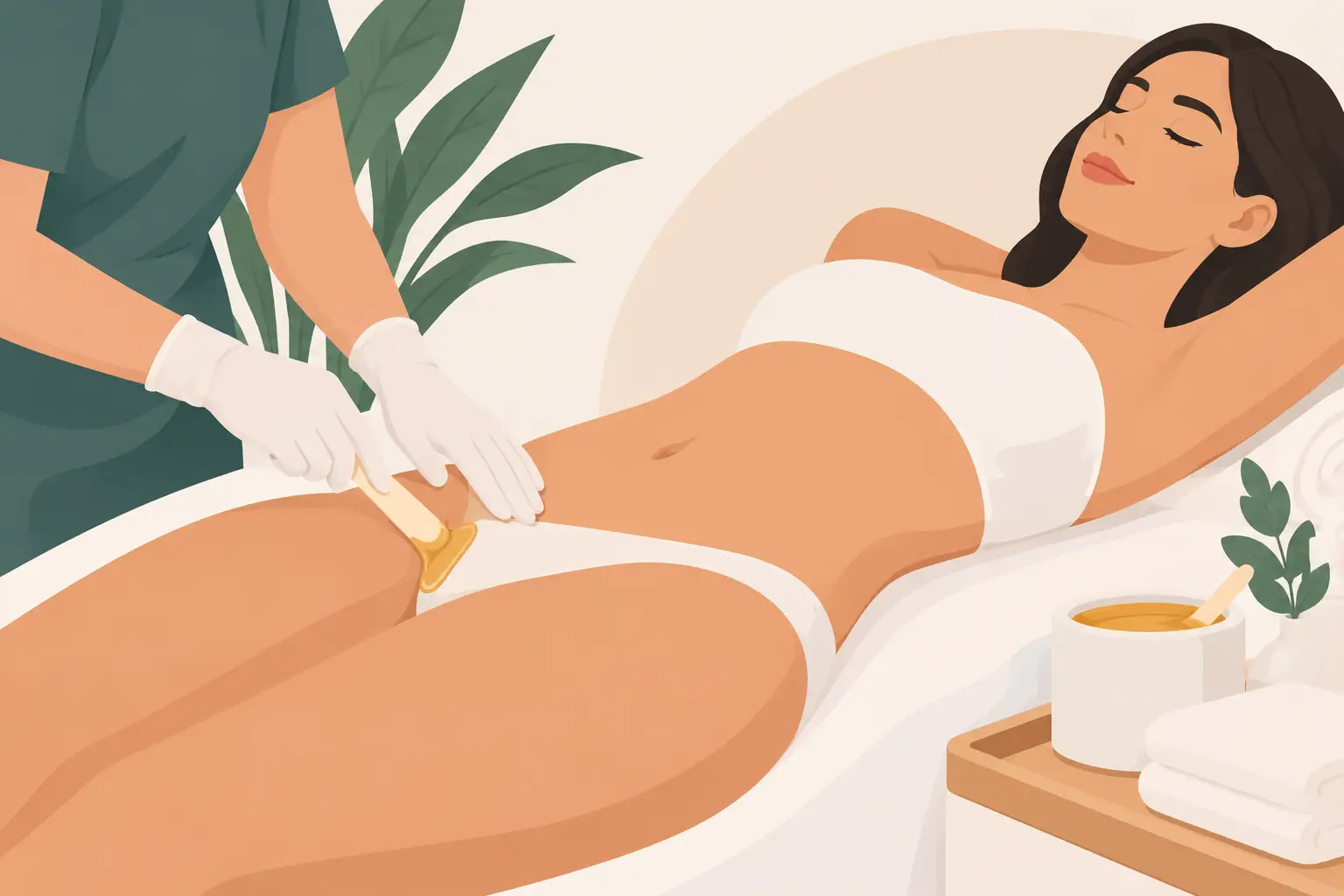
The question, “how painful is Brazilian waxing?” is usually asked quietly, often right before someone books their first appointment. The honest answer is that you will feel it, but the experience is typically far more manageable than the scary stories make it sound. A Brazilian is quick, highly individualized, and made easier by the right technique, preparation, and aftercare.
You do not need to be fearless to book. You only need an esthetician who treats your comfort, privacy, and skin as part of the service – not as an afterthought.
How painful is Brazilian waxing, really?
Brazilian waxing involves removing hair from the bikini area at the root, so there is a brief, sharp sensation when wax is removed. Most clients describe it as a quick sting or snap that fades almost immediately. It is not usually one long, continuous painful experience. Your esthetician works in small sections, and each pull lasts seconds.
The most sensitive areas tend to be closer to the labia and around the back. The bikini line and upper pubic area are often easier to tolerate. Everyone’s pain threshold is different, so a first appointment can feel more intense simply because the hair is thicker and you do not yet know what to expect.
For many clients, the anticipation is worse than the appointment itself. Once the first few strips are done, your body relaxes, you understand the rhythm, and the service moves quickly. A skilled professional will check in, adjust their approach when needed, and never make you feel like you need to “tough it out” silently.
What makes a Brazilian wax hurt more or less?
Pain is not random. A few practical factors can change how a Brazilian feels from one visit to the next.
Hair length matters. Hair that is too short may not grip properly, which can mean repeated passes. Hair that is overly long can pull more than necessary. For waxing, roughly a quarter inch of growth is usually ideal – about the length of a grain of rice. If you are unsure, let your provider guide you rather than trimming aggressively beforehand.
Your cycle can matter, too. Many people feel more sensitive in the days leading up to and during their period. You can still receive a Brazilian during your cycle if you are comfortable, but booking for another week may feel easier if you know your sensitivity increases then.
Caffeine, alcohol, poor sleep, and stress can also leave your nervous system more reactive. That does not mean you have to follow a perfect routine before every appointment. It simply means a calm morning, water, a meal, and a little extra time can help your body feel more settled.
Finally, technique makes a real difference. When hair is removed with thoughtful tension, clean application, and attention to the direction of growth, there is less unnecessary pulling on the skin. It can also reduce the irritation and ingrown hairs that sometimes make people think waxing is not for them.
The first Brazilian is usually the toughest
If you have been shaving, your first Brazilian may feel stronger than future appointments because the hair has had time to grow in fully and may be coarse. That is normal. With consistent appointments, many clients find that regrowth becomes softer, finer, and easier to remove.
Consistency does not mean forcing yourself into an appointment before you are ready. It means avoiding the shave-grow-shave cycle if your goal is a smoother, more predictable experience. Most clients who maintain hair removal every four to six weeks notice that the service becomes more familiar and often more comfortable over time.
There is a trade-off: waiting months between appointments can give you a full reset, but it may also mean denser growth at your next visit. Your esthetician can help you find a schedule that suits your skin, hair growth, and lifestyle.
Waxing, sugaring, and Nufree: comfort is personal
A Brazilian does not have to be a one-method decision. Waxing is efficient and effective for many hair types, especially when performed by a trained professional. Sugaring is applied differently and is often removed in the natural direction of hair growth, which some clients find gentler on their skin.
Nufree is another option for clients who are especially concerned about discomfort or irritation. It is designed as a virtually painless hair-removal option and can be a helpful conversation starter for sensitive skin. “Virtually painless” does not mean every person will feel nothing, especially with coarse hair or a first-time Brazilian, but it may be the better fit for some clients.
The best method depends on your hair texture, skin sensitivity, previous reactions, and personal comfort level. You should never feel pressured into a service method because it is the only one a salon offers. A consultation should leave you feeling informed, not sold to.
How to make your appointment more comfortable
A little preparation can make a noticeable difference. Arrive with clean, dry skin and skip heavy lotions, oils, or numbing creams unless your provider has specifically approved them. Certain products can interfere with hair removal or make skin harder to work with safely.
Wear loose, breathable underwear and clothing afterward. Friction, tight waistbands, and sweaty workouts can make freshly waxed skin feel more irritated. If possible, schedule your appointment when you can give yourself a calmer day afterward rather than rushing straight into a long workout or a hot yoga class.
If you use retinoids, strong exfoliants, acne medications, or prescription skin treatments, mention them before your appointment. These products can make skin more sensitive. The same goes for recent sun exposure, chemical peels, or any area that is irritated, broken, or actively inflamed. A professional will prioritize skin safety over completing every part of the service.
During the Brazilian, speak up. Tell your esthetician if you are nervous, if you need a breathing break, or if a position feels uncomfortable. There is no prize for pretending you are fine. A respectful provider expects questions and works at a pace that helps you feel in control.
Aftercare protects your skin and your results
The sting should fade quickly, but mild redness and sensitivity for a few hours can be normal. Your skin has just had hair removed from the follicle, so treat it gently. Avoid heat, sweating, swimming, friction, and sexual activity for the first 24 hours when possible.
After that initial recovery period, a consistent exfoliation and hydration routine is one of the best ways to help prevent ingrown hairs. Exfoliation lifts dead skin cells that can trap new growth, while hydration keeps the skin barrier comfortable and supple. The right timing and products matter, especially if you have sensitive skin, so ask for personalized recommendations instead of scrubbing too soon or too aggressively.
At Create Confidence, the focus is not just on getting hair off. It is on supporting the skin before, during, and after removal through growth-direction techniques, thoughtful preparation, soothing care, and education that helps reduce ingrowns between visits.
When pain or irritation is not normal
A brief sting, mild redness, and temporary tenderness can be expected. Severe pain, swelling that worsens, blistering, persistent burning, or signs of infection are not something to push through. Contact a medical professional if symptoms are significant or do not improve.
You may also need to postpone a Brazilian if you have an active skin infection, open cuts, a sunburn, or a condition that makes the skin unusually fragile. Being candid during your consultation protects you. There is no judgment in rescheduling when your skin needs a break.
A Brazilian should feel professional, not intimidating
The right appointment is private, clean, efficient, and respectful. You should know what is happening before it happens, have room to ask questions, and leave with clear aftercare guidance. First-time nerves are normal, but awkwardness, pressure, and being rushed do not have to be part of the experience.
If you are curious but hesitant, give yourself permission to start with a conversation. Comfort grows when you know your options, trust the person providing the service, and choose a pace that feels right for you.